
EbookerExtra

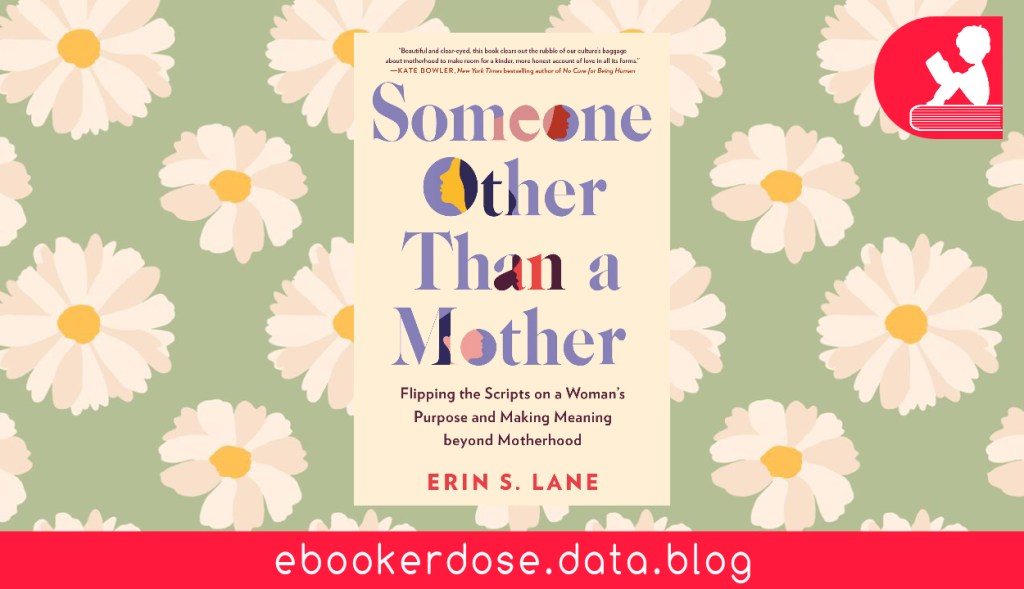
Someone Other Than a Mother – Erin S. Lane

Is it possible to do something more meaningful than mothering?

As a young Catholic girl who grew up in the American Midwest on white bread and Jesus, Erin S. Lane was given two options for a life well-lived: Mother or Mother Superior. She could marry a man and mother her own children, or she could marry God, so to speak, and mother the world’s children. Both were good outcomes for someone else’s life. Neither would fit the shape of hers.

Interweaving Lane’s story with those of other women—including singles and couples, stepparents and foster parents, the infertile and the ambivalent—Someone Other Than a Mother challenges the social scripts that put moms on an impossible pedestal and shame childless women and nontraditional families for not measuring up. You may have heard these lines before:
• “Motherhood is the toughest job.” This script diminishes the work of non-moms and pressures moms to make parenting their full-time gig.
• “It’ll be different with your own.” This script underestimates the love of nonbiological kin and pushes unfair expectations onto nuclear families.
• “Family is the greatest legacy.” This script turns children into the ultimate sign of a woman’s worth and discounts the quieter ways we leave our mark.

With candor and verve, Someone Other Than a Mother tears up the shaming social scripts that are bad for moms and non-moms alike and rewrites the story of a life well-lived, one in which purpose is bigger than body parts, identity is fuller than offspring, and legacy is so much more than DNA.
EbookerExtra

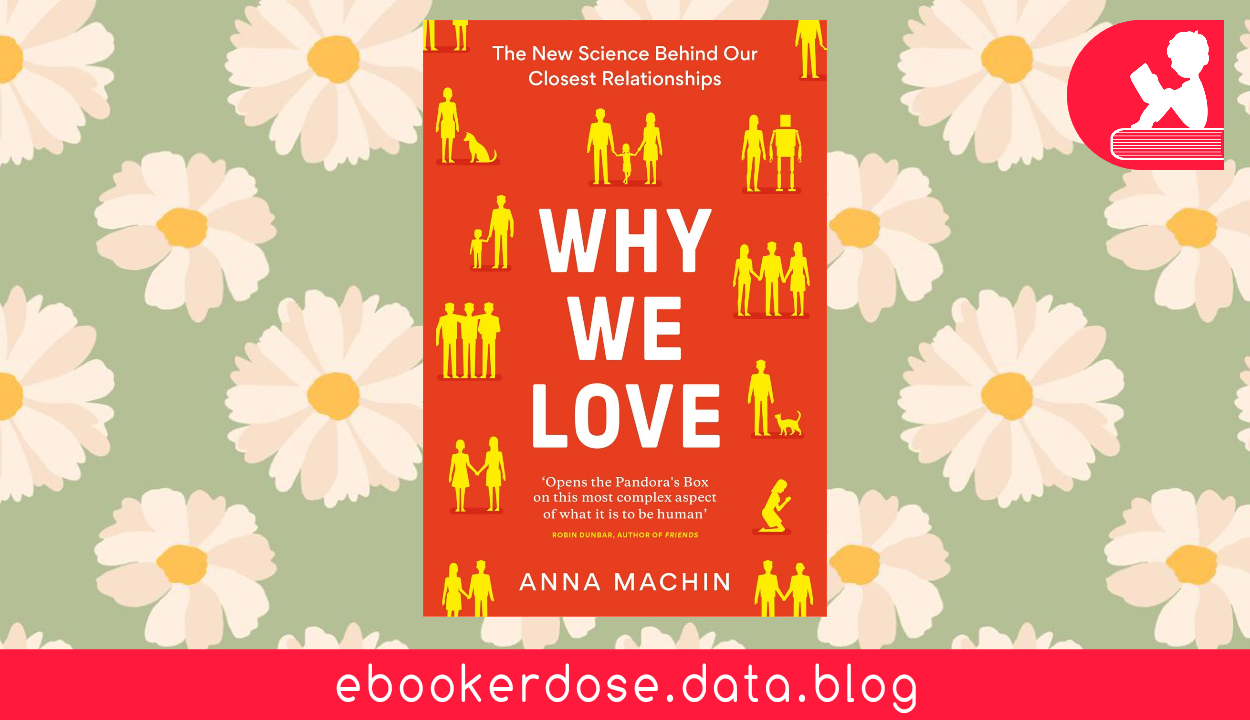
Why Do We Love – Anna Machin

Anna Machin – Why We Love


What can the social and life sciences tell us about the most fundamental and unquantifiable human experience—love? Anna Manchin is interested in the the the most inclusive possible answer, one that, unlike previous books on the subject, considers friendship and family on par with romantic love, as well as polyamory, chosen families, queer love, and touchingly, the love we feel for pets, celebrities, and deities.

Anna delves into these intimate relationships from the levels of biology, chemistry, and neuroscience all the way up to psychology, sociology, and evolution, in engaging, accessible, and ever-charming prose.

But Anna doesn’t shy away from love’s darker consequences – its addictive nature which can lead us towards, or leave us susceptible to, manipulation, coercion, and even violence. And yet, in the end, her book is an argument for love. Growing evidence shows that the nature and quality of our relationships is the most significant factor in our life satisfaction, happiness, physical and mental health – more important than quitting smoking or losing weight. Love is the center of what makes us human. It is, by nature, inefficient – and in our ever-busier world, it can tend to be shunted to the side. Anna’s goal, therefore, is to expand our understanding and reinvigorate our awe at the complexities and intricacies of the human heart.

Building on the great tradition of writers like Esther Perel, Alain de Botton, Erich Fromm, Stan Tatkin, Sue Johnson, and Helen Fisher, Anna’s depth of research and wells of empathy bring us many leaps forward in the eternal project of understanding ourselves.

EbookerExtra

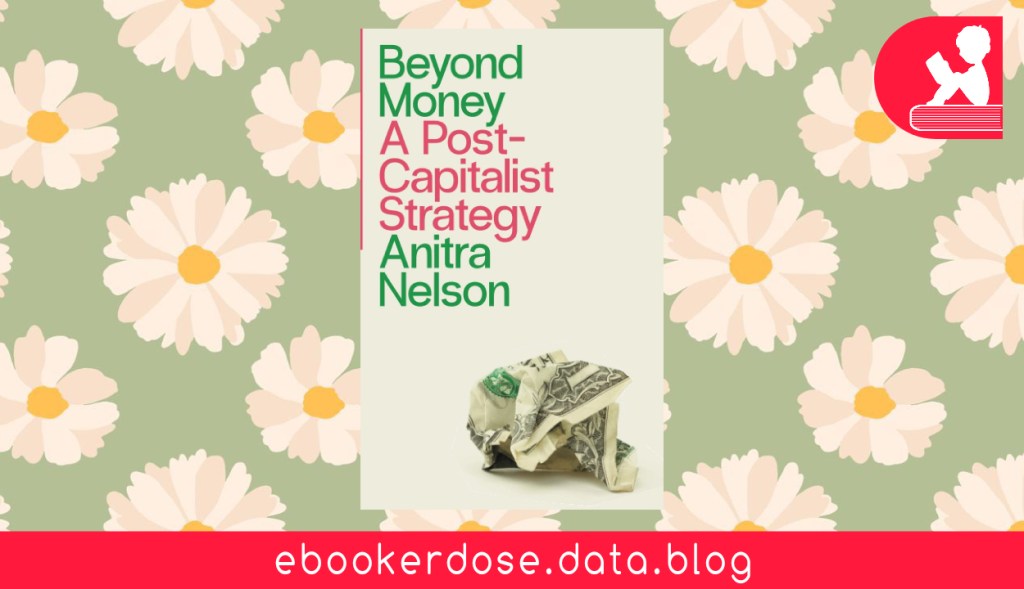
Beyond Money – Anita Nelson

A fascinating portal into arguments about why we need to get beyond money’ – Harry Cleaver

What would a world without money look like? This book is a lively thought experiment that deepens our understanding of how money is the driver of political power, environmental destruction and social inequality today, arguing that it has to be abolished rather than repurposed to achieve a postcapitalist future.

Grounded in historical debates about money, Anitra Nelson draws on a spectrum of political and economic thought and activism, including feminism, ecoanarchism, degrowth, permaculture, autonomism, Marxism and ecosocialism. Looking to Indigenous rights activism and the defense of commons, an international network of activists engaged in a fight for a money-free society emerges.

Beyond Money shows that, by organizing around post-money versions of the future, activists have a hope of creating a world that embodies their radical values and visions.